設計模式
裝飾器模式
裝飾器模式(Decorator Pattern)是一種結構型設計模式,它允許你動態地爲對象添加新的行爲,而不改變其結構或影響其他對象。這種模式通過將對象放入一個“包裝器”(即裝飾器對象)中,以便在保持原始對象類型不變的情況下,擴展或修改其行爲。
- 對象組合:裝飾器模式依賴於對象組合(composition),而不是繼承(inheritance)。你可以將一個對象嵌套在另一個對象中,從而添加額外的功能。
- 遵循接口:裝飾器和被裝飾對象通常都實現相同的接口或繼承相同的父類,因此可以互換使用。
- 動態擴展:裝飾器模式可以在運行時爲對象添加新的功能,而不像繼承那樣在編譯時就固定了行爲。
下麵是一個裝飾器模式的示例代碼
1
2
3
4
5
|
interface Coffee {
String getDescription();
double getCost();
}
|
1
2
3
4
5
6
7
8
9
10
11
12
|
class SimpleCoffee implements Coffee {
@Override
public String getDescription() {
return "Simple Coffee";
}
@Override
public double getCost() {
return 5.0;
}
}
|
1
2
3
4
5
6
7
8
9
10
11
12
13
14
15
16
17
18
|
abstract class CoffeeDecorator implements Coffee {
protected Coffee decoratedCoffee;
public CoffeeDecorator(Coffee coffee) {
this.decoratedCoffee = coffee;
}
@Override
public String getDescription() {
return decoratedCoffee.getDescription();
}
@Override
public double getCost() {
return decoratedCoffee.getCost();
}
}
|
1
2
3
4
5
6
7
8
9
10
11
12
13
14
15
16
|
class MilkDecorator extends CoffeeDecorator {
public MilkDecorator(Coffee coffee) {
super(coffee);
}
@Override
public String getDescription() {
return decoratedCoffee.getDescription() + ", Milk";
}
@Override
public double getCost() {
return decoratedCoffee.getCost() + 1.5;
}
}
|
1
2
3
4
5
6
7
8
9
10
11
12
13
14
15
16
|
class SugarDecorator extends CoffeeDecorator {
public SugarDecorator(Coffee coffee) {
super(coffee);
}
@Override
public String getDescription() {
return decoratedCoffee.getDescription() + ", Sugar";
}
@Override
public double getCost() {
return decoratedCoffee.getCost() + 0.5;
}
}
|
1
2
3
4
5
6
7
8
9
10
11
12
13
14
15
16
17
18
19
|
public class CoffeeShop {
public static void main(String[] args) {
Coffee coffee = new SimpleCoffee();
coffee = new MilkDecorator(coffee);
coffee = new SugarDecorator(coffee);
System.out.println("Description: " + coffee.getDescription());
System.out.println("Cost: $" + coffee.getCost());
}
}
|
UML
summary
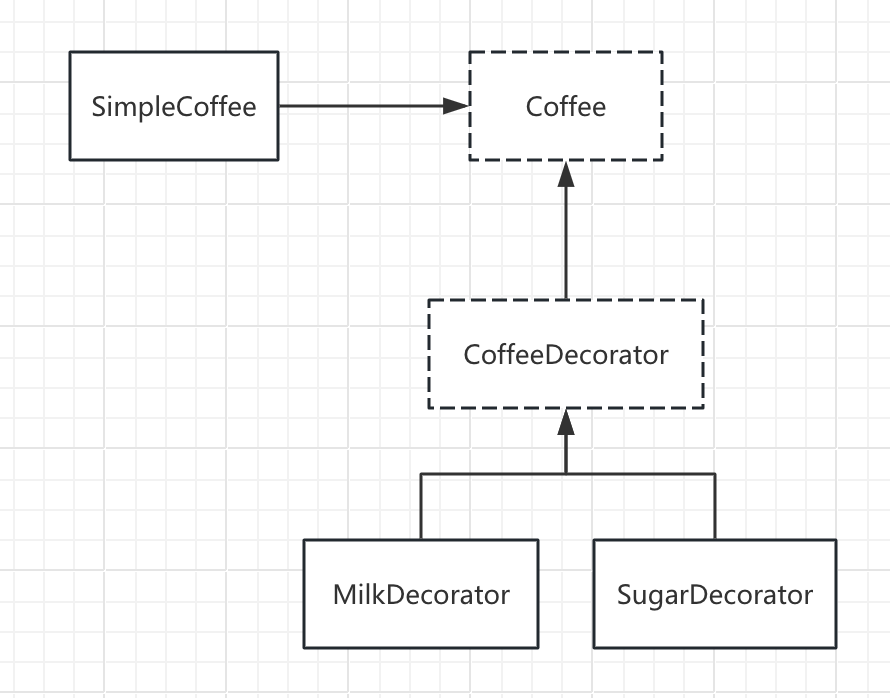
被修飾的是一個接口(coffee)的實現類(SimpleCoffee),裝飾類的基類是CoffeeDecorator,兩個裝飾器分別是MilkDecorator和SugarDecorator。
在這個場景下,MilkDecorator和SugarDecorator裝飾了SimpleCoffee,擴展了它的功能而且並沒有改變被修飾類的結構和繼承關繫。
適配器模式
適配器模式(Adapter Pattern)是一種結構型設計模式,它用於將一個類的接口轉換成客戶期望的另一個接口,使得原本由於接口不兼容而不能一起工作的類可以協同工作。適配器模式特別有用在你想複用一些現有的類,但它們的接口不符合你的需求時。
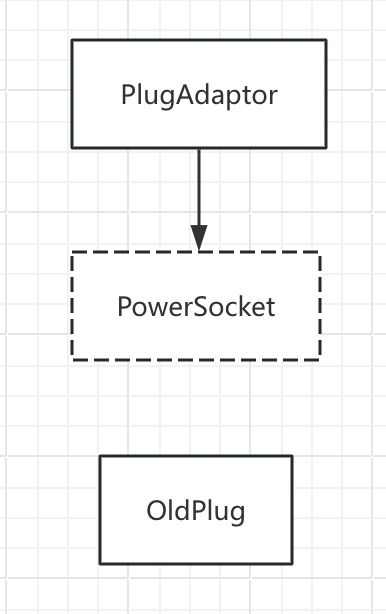
- 接口轉換:適配器模式的核心是接口轉換,它通過引入一個適配器類,把現有類的接口轉化爲客戶所期望的接口。
- 類適配器與對象適配器:
- 類適配器:使用繼承來實現適配器功能。
- 對象適配器:使用組合來實現適配器功能,更加靈活,因爲它不依賴於具體的實現而是依賴於接口。
下麵是一個適配器模式的示例代碼
1
2
3
4
|
interface PowerSocket {
void plugIn();
}
|
1
2
3
4
5
6
|
class OldPlug {
void connect() {
System.out.println("Old plug connected.");
}
}
|
1
2
3
4
5
6
7
8
9
10
11
12
13
|
class PlugAdapter implements PowerSocket {
private OldPlug oldPlug;
public PlugAdapter(OldPlug oldPlug) {
this.oldPlug = oldPlug;
}
@Override
public void plugIn() {
oldPlug.connect();
}
}
|
1
2
3
4
5
6
7
8
|
public class AdapterPatternExample {
public static void main(String[] args) {
OldPlug oldPlug = new OldPlug();
PowerSocket adapter = new PlugAdapter(oldPlug);
adapter.plugIn();
}
}
|
UML
代理模式
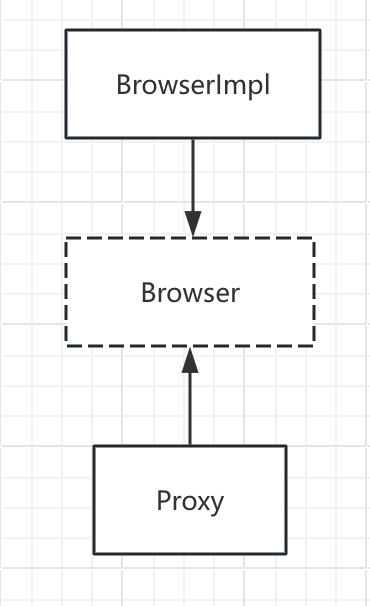
代理模式簡而言之就是在不改變原始接口的前提下,使用另一個接口對原始接口的功能進行擴展。
下麵是一個代理模式的示例代碼
1
2
3
4
|
public interface Browser {
void request();
}
|
1
2
3
4
5
6
7
|
public class BrowserImpl implements Browser {
@Override
public void request() {
System.out.println("Sending Request....");
}
}
|
1
2
3
4
5
6
7
8
9
10
11
12
13
14
|
public class Proxy implements Browser {
private final Browser browser;
public Proxy(BrowserImpl browser) {
this.browser = browser;
}
@Override
public void request() {
System.out.println("Proxy handling request....");
browser.request();
}
}
|
1
2
3
4
5
6
7
8
|
public class Client {
public static void main(String[] args) {
BrowserImpl browser = new BrowserImpl();
Proxy proxy = new Proxy(browser);
proxy.request();
}
}
|
1
2
3
| Output:
Proxy handling request....
Sending Request....
|
UML